
Japanese chassis number check: what the number can tell you, and what it can't
Sources checked 2 October 2026
If you're looking at a car in Japan and searching for a "VIN check", you've probably found that the car doesn't seem to have a VIN. Most cars sold new in Japan are identified by a chassis number instead. It's the key to the car's paperwork and to any paid history report. But it's a number on paper. It tells you which car you're looking at and some of what has been recorded about it. It doesn't tell you what the car is like today.
What a Japanese chassis number is
A 17-character VIN, the format used in Europe and North America, is built to a set pattern: maker, model details, a check digit and a serial. A Japanese chassis number is shorter and simpler. It's usually the model code followed by a serial number, joined by a hyphen.
The Japanese transport ministry's own sample certificate shows a Nissan with the code CBA-R35, the code used for the R35 GT-R, and a chassis number that begins with R35. The letters before the hyphen (CBA here) usually relate to the emissions rules the car was approved under. The part that matters for identity is the model part, and the chassis number should start with it.
You'll find the number in two places:
- On the car. The chassis number is stamped into the body, and there's usually a separate model plate as well. Where they are depends on the model, often somewhere in the engine bay or on a door pillar. Don't rely on a diagram from the internet. Ask the seller to photograph the stamping where it actually is.
- On the papers. While the car is registered in Japan, the chassis number is printed on the roadworthiness certificate (shaken certificate). Once a car has been deregistered for export, it appears on the export certificate instead.
What the number and its papers can tell you
Since January 2023 (kei cars since January 2024), Japan's shaken certificate has been a smaller sheet with an IC tag. According to the transport ministry, the printed face of the certificate shows, among other things:
- the chassis number
- the make and model code
- the engine model
- the year and month of first registration
The expiry date and the owner's name and address are no longer printed. They're stored only on the IC tag. The user's name and the registration number are still printed.
The fuller record behind the certificate also holds odometer readings taken at inspection. On the ministry's sample record, there's a current reading and a previous reading, each with a date. The national inspection data also keeps the highest reading ever recorded, for cars where the reading has gone down at some point, for example after a meter was replaced. These are useful when you compare them with the odometer photo in the listing.
The chassis number is also what paid history reports work from. What a report can return depends on where its data comes from. Auction records, for example, only exist if the car went through an auction.
So, with the chassis number and the papers, you can usually confirm:
- that the car in the listing is the model the seller says it is
- when it was first registered in Japan
- what the odometer read at its recent inspections
What the chassis number can't tell you
Papers record events. They don't record condition. Nothing in a chassis number check tells you:
- What's underneath. Rust on the floor, the sills and the rear arches doesn't appear on any certificate.
- The state of the strut tops. When we look at a car, the underside and the strut tops are among the places we treat as most important. They're also among the places that listing photos leave out.
- Damage nobody reported. A dent or a repair that was never reported anywhere leaves nothing in the record.
- Whether the number stamped on the car is the number on the papers. A history check works from the number you type in. It never sees the car.
Our own car is a good example. It's the grey Toyota Prius α in the photos on this site. Whatever its papers say, they say nothing about the small dent in the roof, which only shows when you look along the panel in the right light, and nothing about what the strut tops look like. Both are in our sample report, because someone stood next to the car and looked.
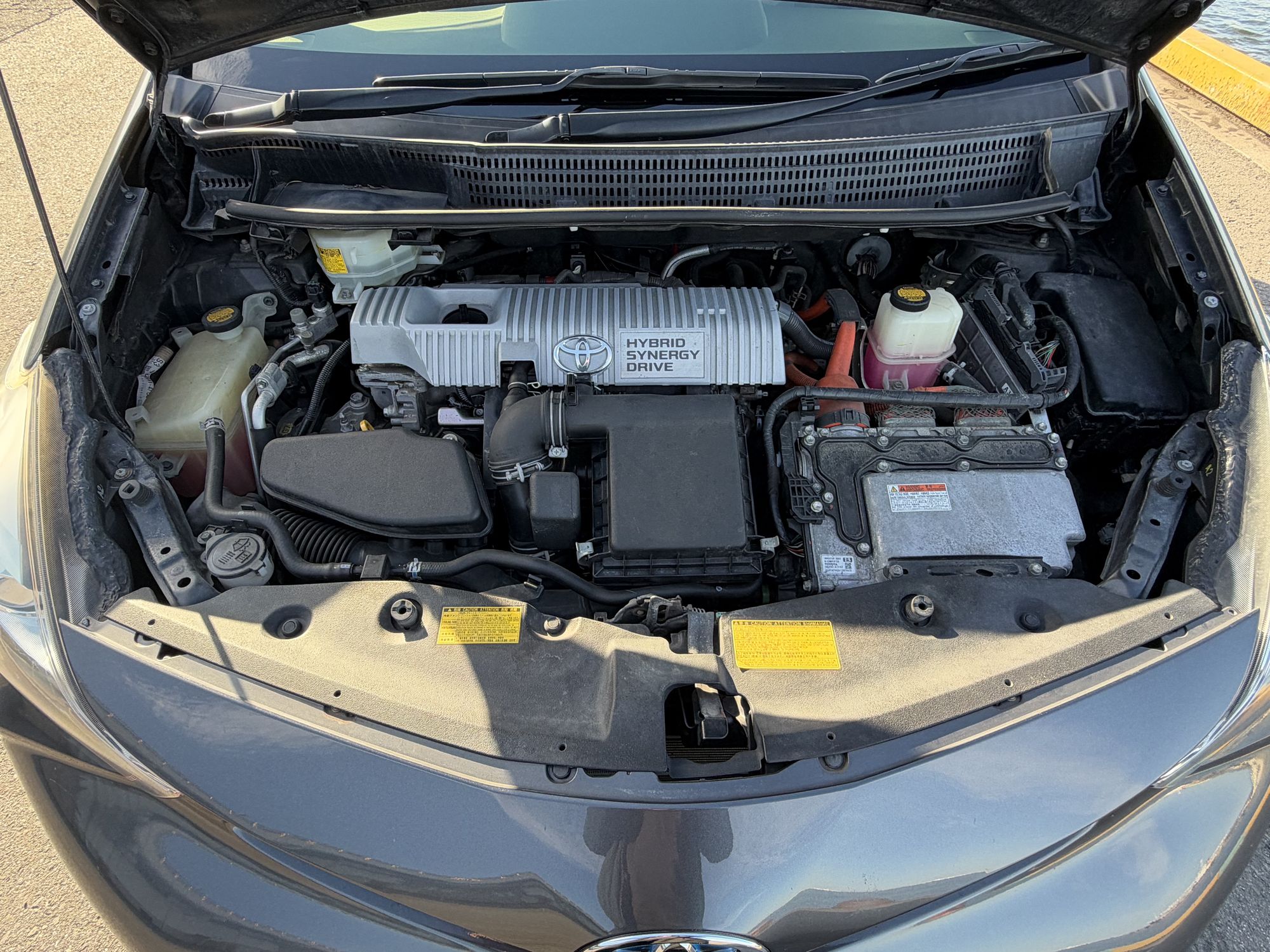
A chassis number check tells you which car it is. It can't tell you what the car is like today.
If you've checked the papers and the history and you still want to know what the car is really like, send us the listing. We'll tell you what we can see and what we can't.
How to check it yourself
You can do most of this by email before you pay anyone.
- Ask for a photo of the stamped chassis number on the car, close enough to read every character. Ask for the model plate too.
- Ask for a photo of the shaken certificate, or the export certificate if the car has already been deregistered. Ask the seller to cover the user's name and the registration number. You don't need them.
- Compare the numbers character by character: the stamping, the certificate and the listing. Check that the chassis number starts with the part of the certificate's model code after the hyphen (R35 in the example above).
- Ask for the inspection record with the odometer readings. While the car is still registered in Japan, the owner or dealer can read it from the certificate's IC tag with the transport ministry's free app and save it as a PDF. Compare the readings and dates with the odometer photo in the listing.
- If you buy a paid history report, ask the provider what its sources are and what period they cover. A report can only tell you what its sources recorded.
- Ask for photos of what the papers can't cover: underneath from both sides, the strut tops in the engine bay, and the rear arches.
- If you post the chassis number online to ask for help, hide the last few digits. The model part is enough for people to tell you what the car is.
If the seller won't send the stamping or the certificate, that's worth knowing in itself.
The chassis number tells you which car it is. The repair history line on a listing answers a different question, covered in repair history and flood cars. For where the papers fit into buying and shipping as a whole, see how to import a car from Japan.
Sources
- Ministry of Land, Infrastructure, Transport and Tourism (MLIT), Electronic vehicle inspection certificate: what is printed on the certificate and what is stored on the IC tag (in Japanese), checked 2 October 2026
- MLIT, Sample vehicle inspection certificate record, showing the chassis number, model code and current and previous odometer readings (PDF, in Japanese), checked 2 October 2026
- MLIT, Electronic vehicle inspection certificate FAQ: the free certificate reader app and the end of paper record printouts (in Japanese), checked 2 October 2026
- Automobile Inspection & Registration Information Association (AIRIA), New inspection and registration data items: odometer readings at inspection and the recorded maximum (PDF, in Japanese), checked 2 October 2026
- Light Motor Vehicle Inspection Organization, Electronic shaken certificates for kei cars: issued from January 2024 (in Japanese), checked 2 October 2026
If you'd rather not chase the seller yourself, we can ask the dealer for the stamping, the papers and the extra photos in Japanese with a Remote Check, or go and see the car with an On-Site Vehicle Viewing. Send us the link and tell us what you're unsure about.