
What dealer photos of a Japanese car show, and what they miss
Sources checked 2 October 2026
Listing photos show a car from where a buyer usually stands: front, back, sides, seats, dashboard. They're good at showing what the car looks like. They're not taken to show you rust, the strut tops or the underside, and for a car you're about to ship halfway round the world, those matter more than the paintwork.
I've been modifying cars since I was 18, and I've looked at a lot of Japanese sports cars. What buyers want to know is rarely answered in the listing: where the rust is, what the body is like under the shine, what's broken and how far it's gone. The outside panels count for less than most buyers think. The underside and the strut tops count for a lot.
To show what that means, I photographed my own car, a Toyota Prius α, on 1 October 2026. The photos below are of that car.
The underside and the strut tops
These are the two places I care about most on any car, and the two places listing photos almost never show.
Strut tops
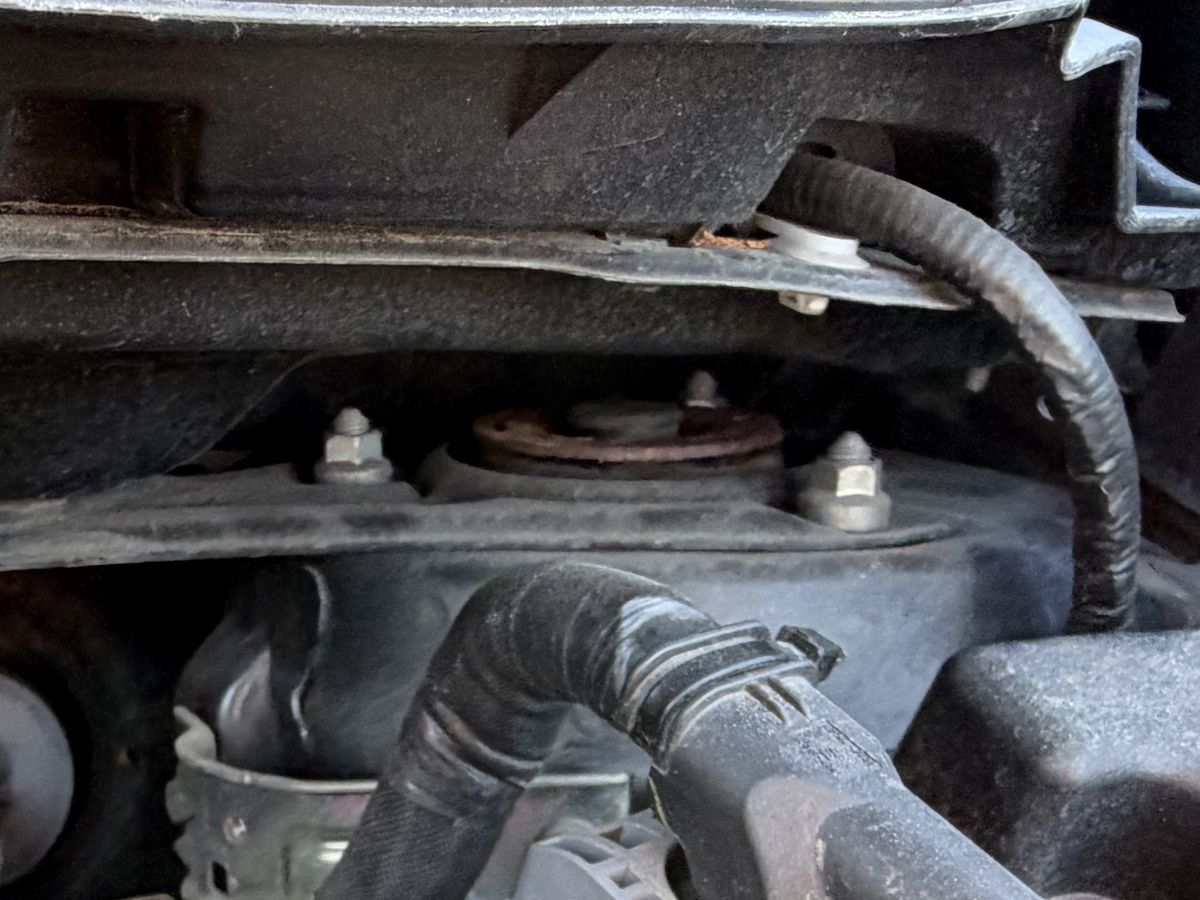
The strut tops are where the front suspension is bolted to the body. They sit at the back corners of the engine bay, half hidden under the panel below the windscreen (windshield). A typical engine bay photo, taken from the front of the car with the bonnet (hood) up, shows the engine cover and the coolant tank. The strut tops are at the far end, in shadow.
This photo was taken close up, looking into the back corner of the engine bay. Now you can see the rust. On this car it's on the strut itself, not on the body around it, and the lower part of the strut is rusty too. Replacing the strut assembly would take care of it. Replacing just the upper mount would clear the rust you can see here. But a car with this much rust may also have rust spreading under the paint, so it isn't something to ignore. What a photo shows is the surface. How far it goes, a photo can't tell you. The same spot on another car can look much worse, and that's the difference you want to know about before you pay for shipping. My car comes from Hokuriku, a snowy region of Japan, and it has plenty of rust.
The underside
The underside is where rust does the most harm and where a photo helps least. Most of it can only be seen properly with the car on a lift.
From ground level you can still see more than a listing shows: the sills (rocker panels) and jacking points, the inside of each wheel arch, the rear arch lips, and the edges of the floor if you crouch with a torch (flashlight). That's how far we go on a viewing. We don't lift the car, so anything that can't be seen from ground level is marked Not verified in the report. On a car that's been lowered a long way, we may not be able to see or photograph much underneath at all.
Two more things a normal photo of my car doesn't show
Damage inside the wheel arch
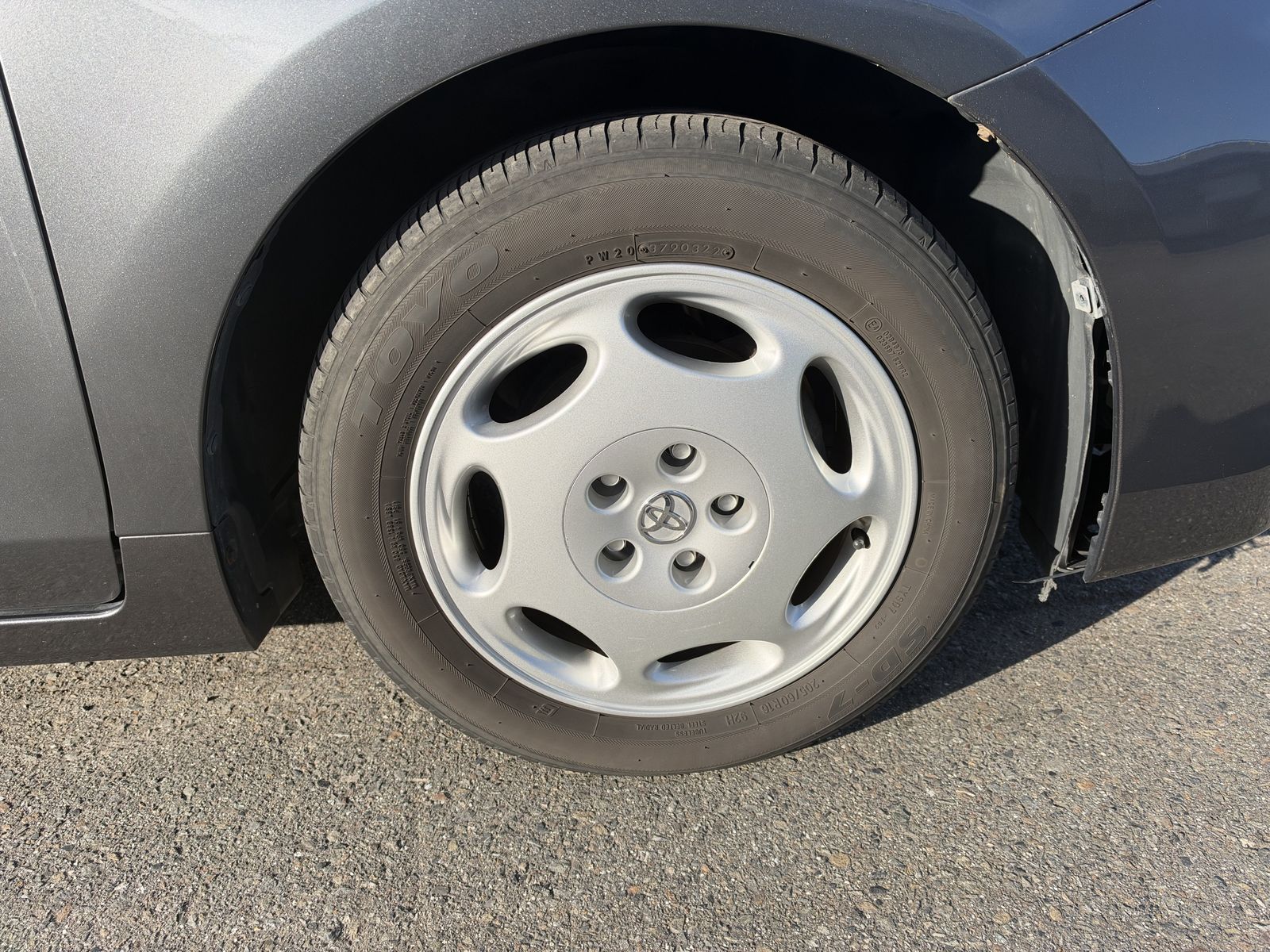
The wheel arch liner (inner fender) on my car is damaged. A listing's opening photo, taken from further back, isn't taken to show this.
The same goes for the back of my car: the rear bumper has taken a knock, and you can't see it in my photo of the rear bumper. Some damage you won't find in photos, only by asking.
A dent you only see in a reflection
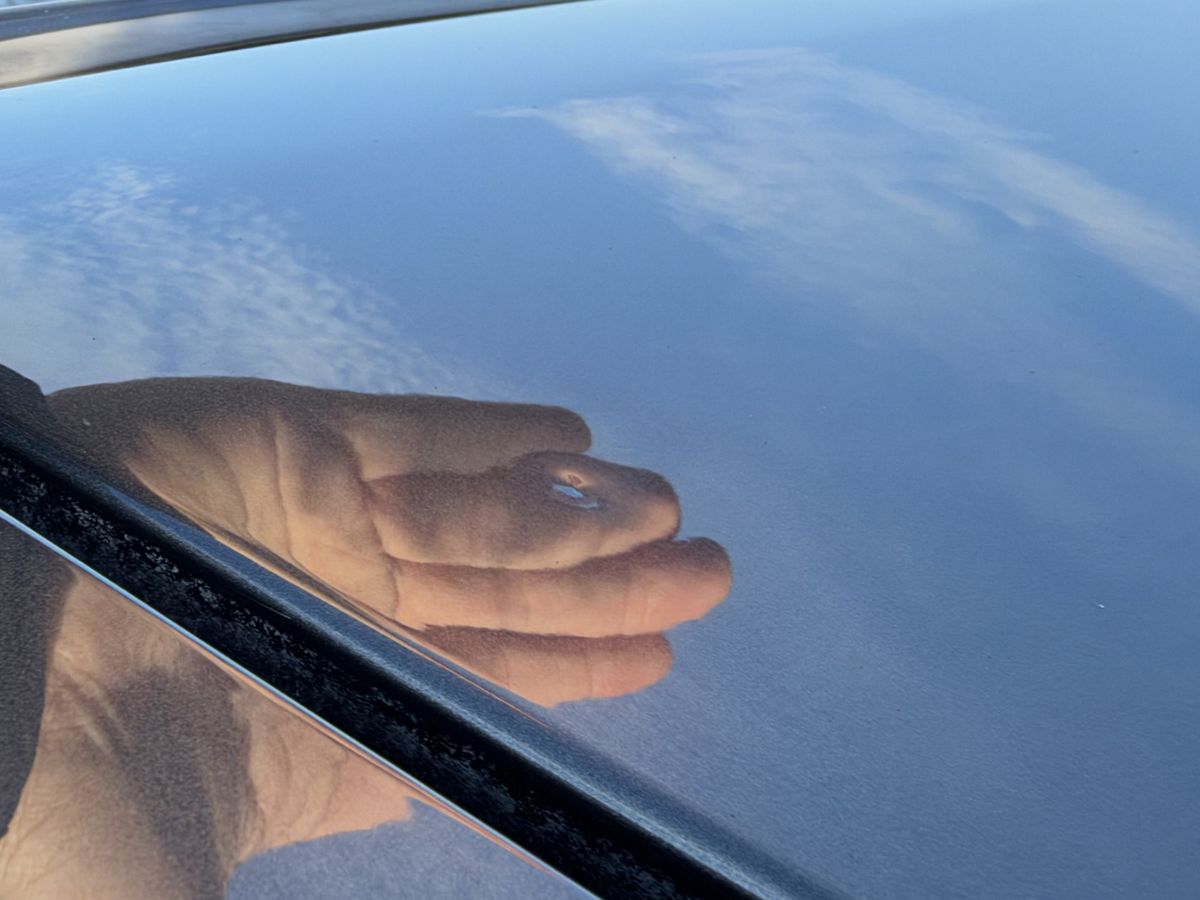
Photographed straight on, this roof looks clean. The dent only shows when you look at a reflection moving across the panel and watch where it bends. Small dents like this rarely come through in listing photos, and the dealer may not know they're there.
On its own, a small dent matters far less than rust. I include it because it shows how much depends on the angle and the light.
For more on particular parts of the car, see rust on the body or a part, how to tell if a car has been repainted and checking the interior. If the car has been lowered, braced or welded, see lowered and modified cars. And for dents a photo may not show, see hail damage, and for a dealer's engine start video, see what to watch and listen for.
Photos to ask the dealer for
If you're buying from photos alone, whatever else you ask for, get the rusty spots photographed. Ask for specific photos, not "more photos". Every car is different, so start with the places that matter for yours:
- Both strut tops, close up, with the bonnet open, taken from the side of the car looking down
- The inside of each front wheel arch, with the steering turned so the arch is open, if the dealer can turn it for you
- The rear arch lips and the bottom edge of each rear wing, close up
- The sills and jacking points along each side, from ground level
- Underneath, as far as the dealer can see from the front and back without lifting the car. If they have a lift, ask whether they'll take photos on it
- The boot floor with the mat lifted, and the spare wheel well
- The dashboard with the ignition on, then again with the engine running, so you can see which warning lights stay on
- Any part of the interior you care about: the driver's seat bolster, the headlining, a switch you know gives trouble on this model
- A short video of the engine starting, and ask whether it had already been run that day
Some dealers will send these quickly. Some won't, and some can't reach the underside without a lift. If emailing a Japanese dealer for photos isn't getting answers, a Remote Check is where we phone them in Japanese and ask for the photos you're missing.
What photos can't tell you
Even a good set of extra photos leaves gaps:
- How deep rust goes. A photo shows the surface, not what's under it.
- Smells. Damp, smoke, a sweet smell of coolant.
- How the engine sounds, and whether it had been warmed up before the video started.
- Panel gaps and paint differences that only show when you walk round the car and compare one side with the other. Even in person, colour and paint texture are what give a repaint away, and a repaint by a good bodyshop may not show at all. We tell you what we could see, not more.
- Anything the dealer chose not to photograph, or didn't notice.
That's why we go and look. We aren't mechanics. We don't lift the car, we don't test drive it, and we don't tell you whether to buy it. We go to the dealer, look closely at the spots you name, such as the strut tops, the arches and what can be seen underneath from ground level, and send you photos, video and the dealer's answers. Each item is marked as something we saw, something the dealer told us, or something we couldn't check.
Found a car, and know which corners you're worried about? Send us the listing and tell us where to look.
When the car is too far away for us
We mainly cover the Tokai region: Aichi, Gifu and Mie. For a car somewhere else in Japan, ask us and we'll quote the travel before you pay, or see the On-Site Vehicle Viewing page for how it works.
If a visit isn't practical, the list above is still the place to start. Send it to the dealer yourself, or ask us to call them in Japanese. Every Remote Check report ends with a list of what photos and phone calls can't show for that car, so you know what's still unanswered.
Sources
- Photos: my own Toyota Prius α, taken on 1 October 2026. No dealer's or customer's car is shown.
- What we look at on a viewing: On-Site Vehicle Viewing, checked 2 October 2026
If the strut tops, the arches or the underside of a car are what's stopping you from buying it, we can go and photograph as much of them as can be seen from ground level, and tell you what we couldn't.